
What SAP announced, what it means for your business, and how to get ready without the hype

Introduction
SAP’s Autonomous Enterprise puts AI agents to work inside your business processes. Here is what it is, what it needs from you, and where to start.
A quick look at how work happens today
Picture a late supplier delivery. Someone in planning spots it. They check stock in one screen, production in another, and then email purchasing. Purchasing looks for another supplier. Finance asks what it will cost. Somebody approves it, and somebody else raises the order.
Every step is done in a system. But a person is still the glue between all of them.
That glue work is what SAP wants AI to take over.
What SAP announced
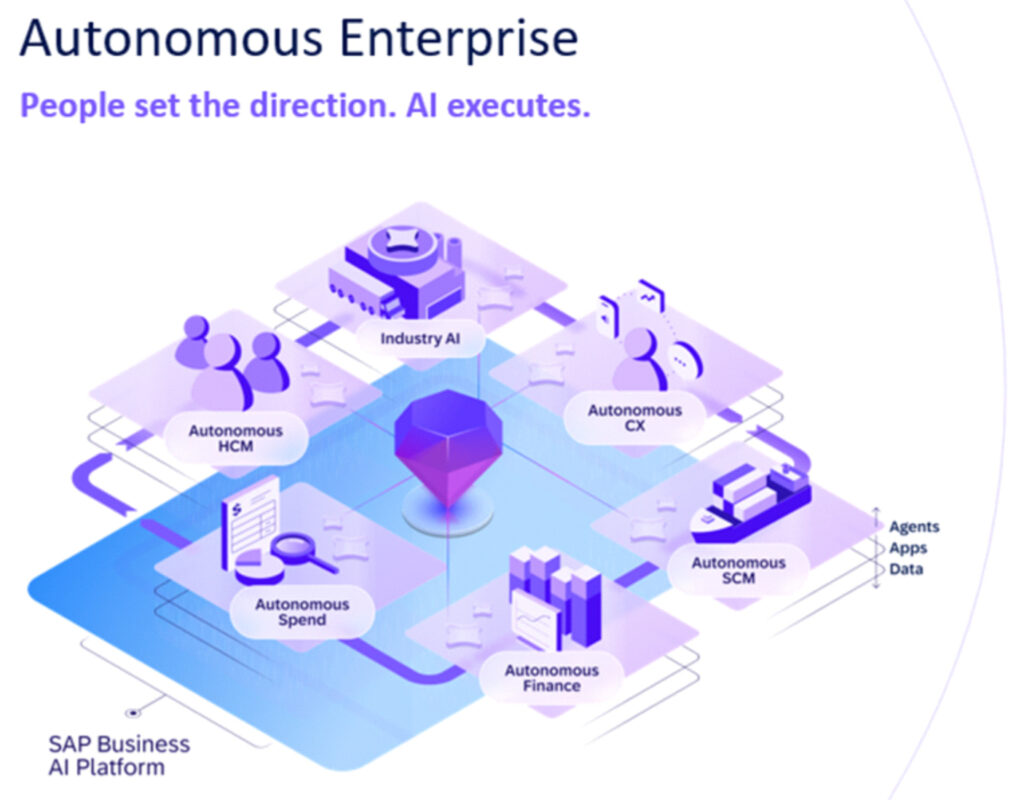
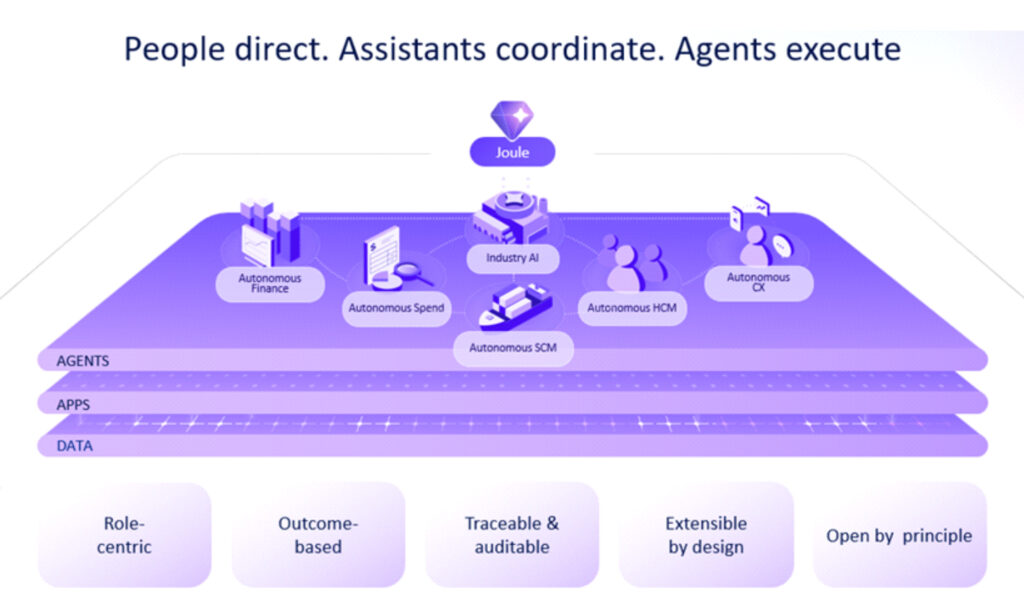
At SAP Sapphire in May 2026, SAP introduced what it calls the Autonomous Enterprise. The idea is simple. People say what they want done and set the rules. AI agents do more of the work in between, inside your SAP processes, with approvals and controls kept in place.
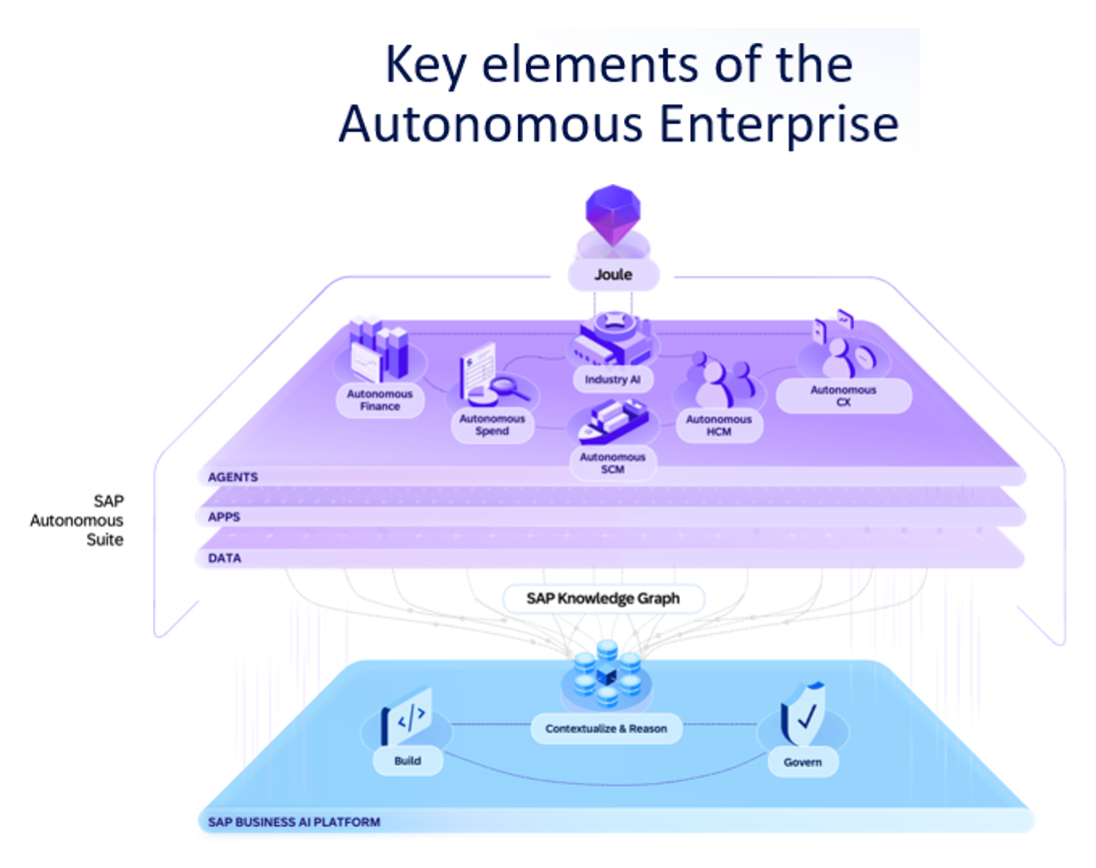
It is built from three parts:
- Joule Work. The front door. You ask for what you need in plain language, and Joule brings together the right assistants and agents, across SAP and non-SAP tools.
- SAP Autonomous Suite. The workers. Ready-made assistants and agents for five areas: finance, spend, supply chain, HR and customer experience. SAP talks about more than 50 assistants and more than 200 agents.
- SAP Business AI Platform. The base underneath. It combines SAP BTP, SAP Business Data Cloud and SAP’s AI tools, so agents work with real business data, and you can build and govern your own.
A fourth piece is worth knowing about. SAP AI Agent Hub, built on SAP LeanIX, is meant to be one place to see and manage every agent you run, SAP or not.
Some of this is available now. Some is still rolling out through 2026. Before you plan around any one feature, check its current status with SAP.
Why the word “enterprise” matters
A chatbot that gives a wrong answer is annoying. An agent that posts a wrong payment is a real problem.
So an agent inside your ERP has to know more than a chat tool does. It needs to know how your purchase orders link to contracts, suppliers, goods receipts and invoices. It needs to know who is allowed to approve what. And it needs to leave a trail an auditor can follow.
That is SAP’s argument: it already holds your process and data context, so its agents can work with that context instead of guessing.
Where it could help
The best fits are jobs with lots of information, clear rules and many hand-offs. A few examples:
- Finance. Chasing invoice exceptions, prioritizing collections, helping with the month-end close and reconciliations.
- Procurement. Checking contract compliance, spotting supplier risk, flagging purchase orders that look wrong.
- Supply chain. Noticing a shortage early and lining up the options, instead of waiting for someone to spot it.
- HR. Answering routine employee questions, coordinating onboarding and hiring steps.
In each case the person does not disappear. They deal with the exceptions and make the judgement calls, and they spend less time chasing information.
Autonomous does not mean unsupervised
This is the most common worry, and it is a fair one.
You decide how much freedom an agent gets. It might be allowed to fix a small, routine invoice mismatch by itself. A large purchase commitment might always need a human sign-off. Anything touching an employee’s pay or job might stay a fully human decision.
The aim is not maximum autonomy. It is the right amount of autonomy for each process.
Is your business ready?
Most are not fully ready yet, and that is normal. Agents are only as good as what sits underneath them. Ask yourself:
- Are our core processes reasonably standard, or does every team do it differently?
- Can we trust our master data, such as materials, suppliers and customers?
- Is our ERP kept clean, or buried under years of custom code?
- Do our SAP and non-SAP systems talk to each other properly?
- Are roles, approval limits and access rules clearly defined?
If several answers are “not really”, that is your starting list. It is also why work such as S/4HANA Cloud, RISE, GROW, Clean Core, BTP and data governance belongs in the AI conversation. That work is the foundation for AI, not a separate project.
How we suggest you start
At TruSpeQ, we would ask a different question first. Not “how many agents can we deploy?” but “which business problem would we most like to fix?”
1. Pick a few processes, not everything
Look for one that eats a lot of manual effort, has enough volume to matter, has decent data, and has an outcome you can measure, such as cost, cash, speed or compliance.
2. Fix the basics under it
Tidy the data. Remove unnecessary custom code. Check the integrations. Do only what that process needs.
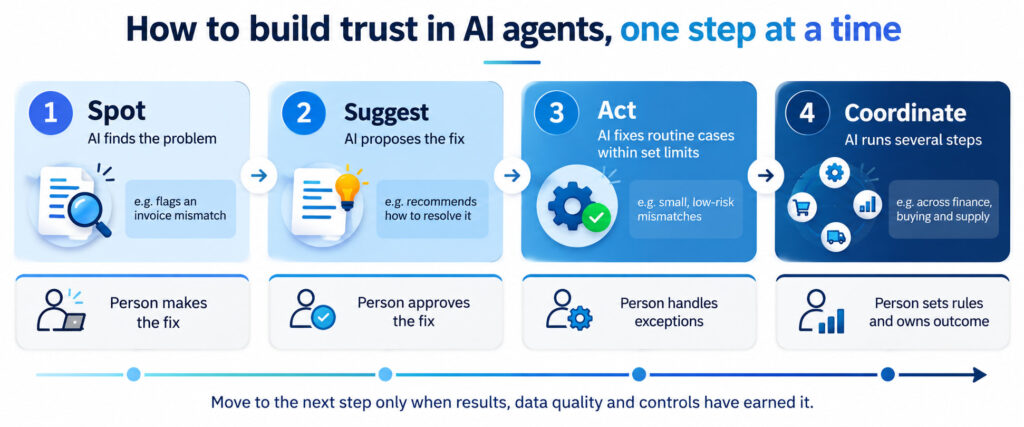
3. Increase trust in steps
Start with the AI spotting a problem. Then let it suggest a fix. Then let it act; within limits you set. Move forward only when the results have earned it.
4. Decide who is accountable
Before an agent acts on its own, agree the answers to a few plain questions:
- What can it suggest, and what can it do?
- What needs a human approval?
- What gets logged, and who reviews it?
- Who is responsible when it gets something wrong?
This is a business decision. IT cannot answer it alone.
The bigger change is for people
The technology is impressive, but the larger shift is in how people spend their day. Less time moving information between systems and checking whether something happened. More time on exceptions, on relationships, and on improving how the business runs.
The enterprise will still run on people. It will just run differently.
How TruSpeQ can help
We help SAP customers link the transformation work they already have underway to this new direction. That covers S/4HANA Cloud, GROW and RISE, BTP and integration, data, Clean Core, and ongoing support. We can help you check where you stand, pick the first use cases, and build the data, integration and governance you need to move ahead safely.
One question to start with: which process in your business takes a lot of human effort only because people are passing information between systems? That is usually the right place to begin.
Talk to us about a short readiness assessment.